
San Clemente al Laterano
Three Levels of History
This church started as a private home in which Christian worship services were held and it grew over the years into a significant minor basilica. You can tour the excavated layers underneath. In brief, the above-ground structure is a church dating from the 11th century, below that is a church dating from the 4th, and below that is a home that also had served briefly as a temple for the worship of Mithra. All of this is over the foundation of a building that burnt to the ground in the great fire of 64 AD. When they say history goes deep in Rome, they mean it.
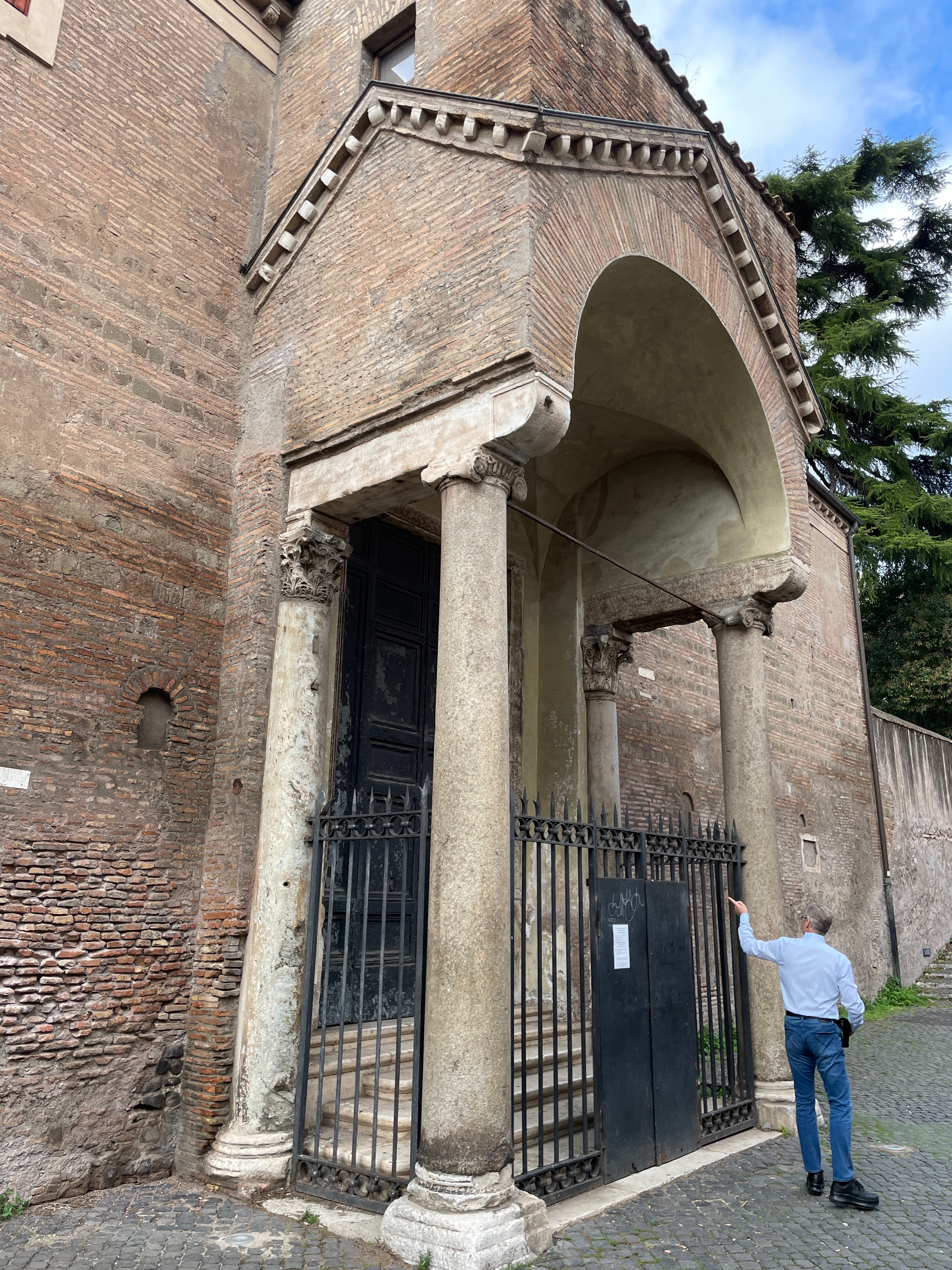
We arrived after lunch and had to wait for a few minutes before being admitted. The entrance above leads into a courtyard, below.
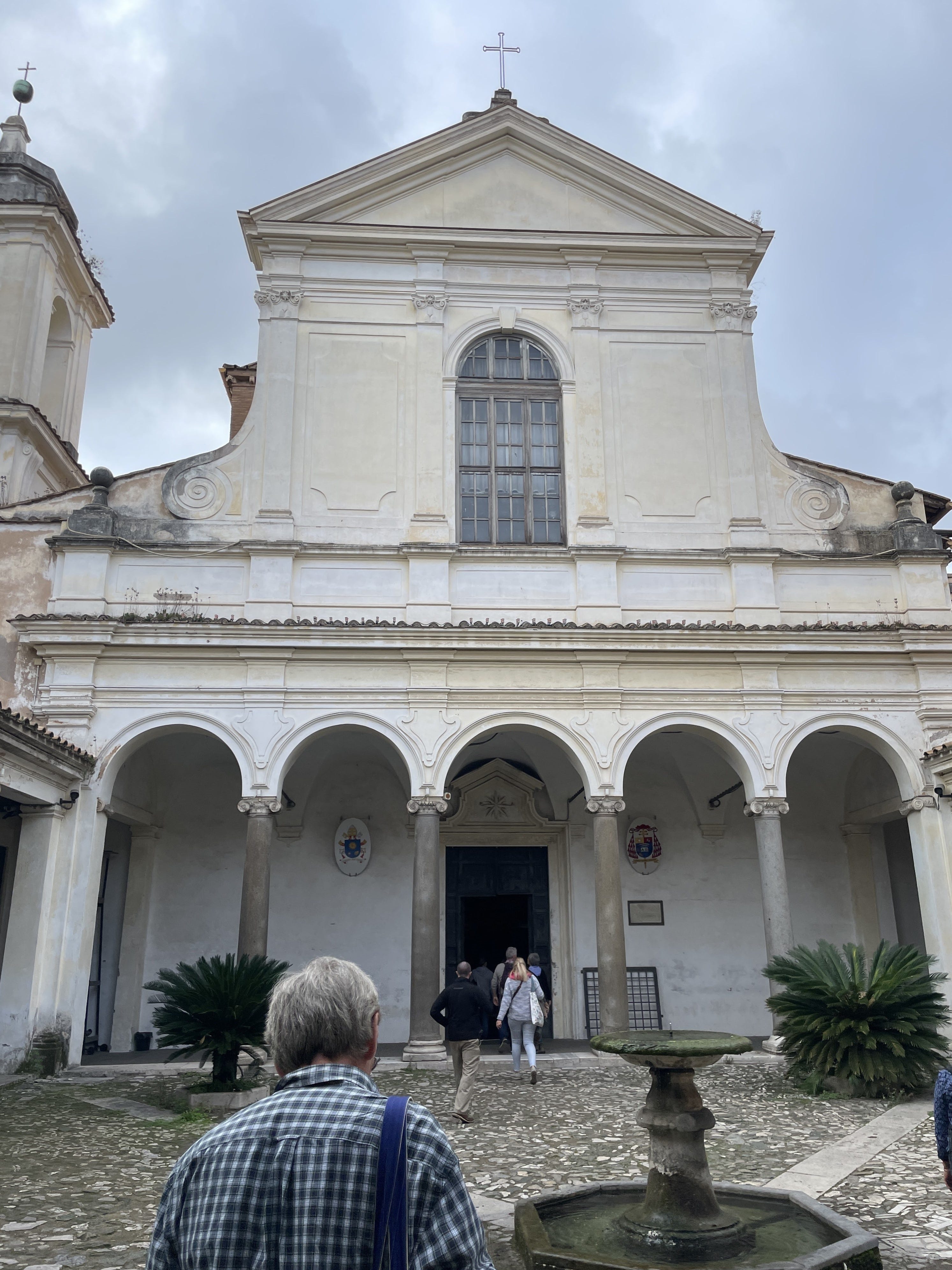
Inside, it is a very impressive church.
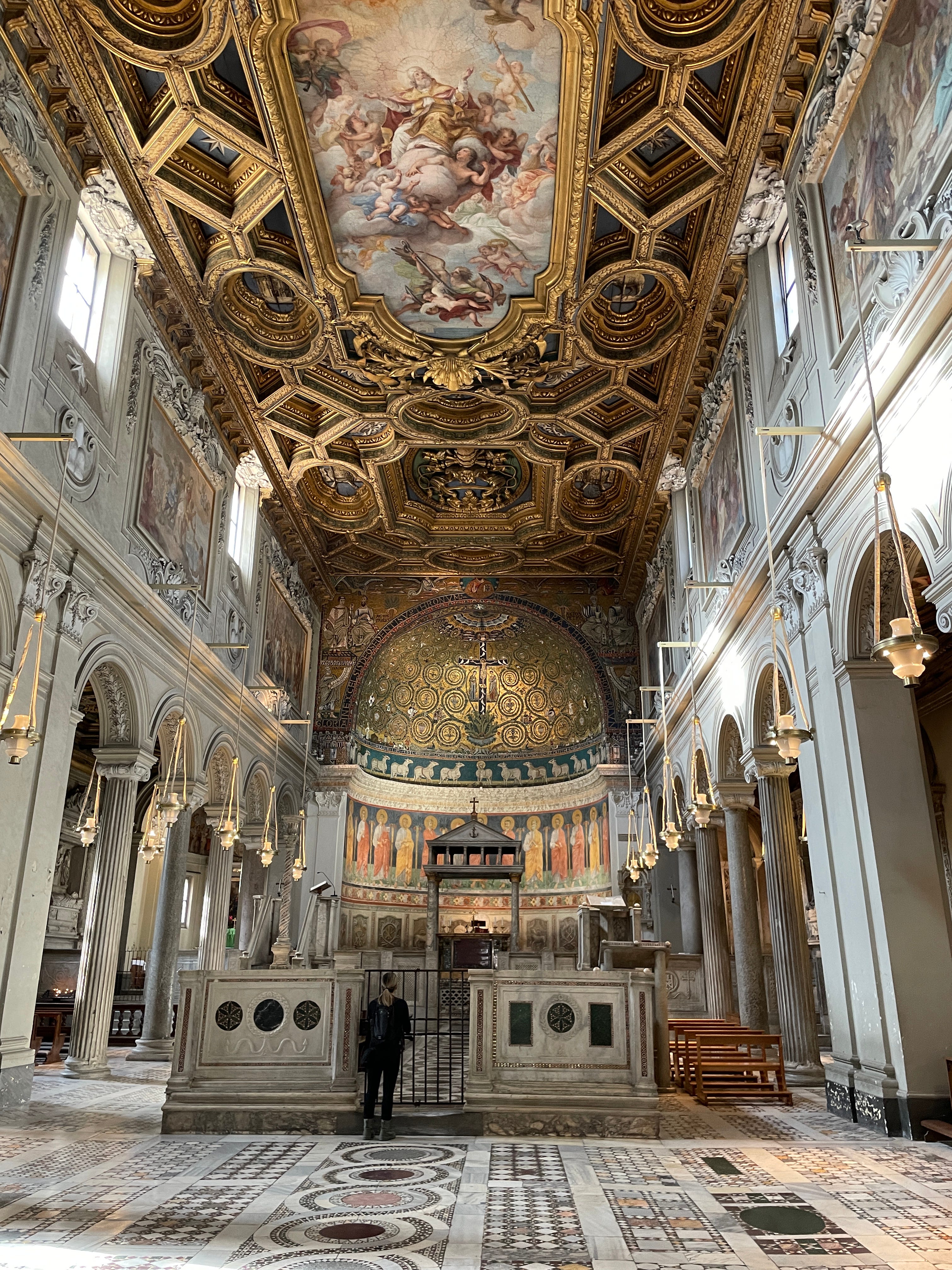
There was nice tile work in the floor and an impressive wooden ceiling with a fresco to the namesake, St. Clement I, pope and martyr.
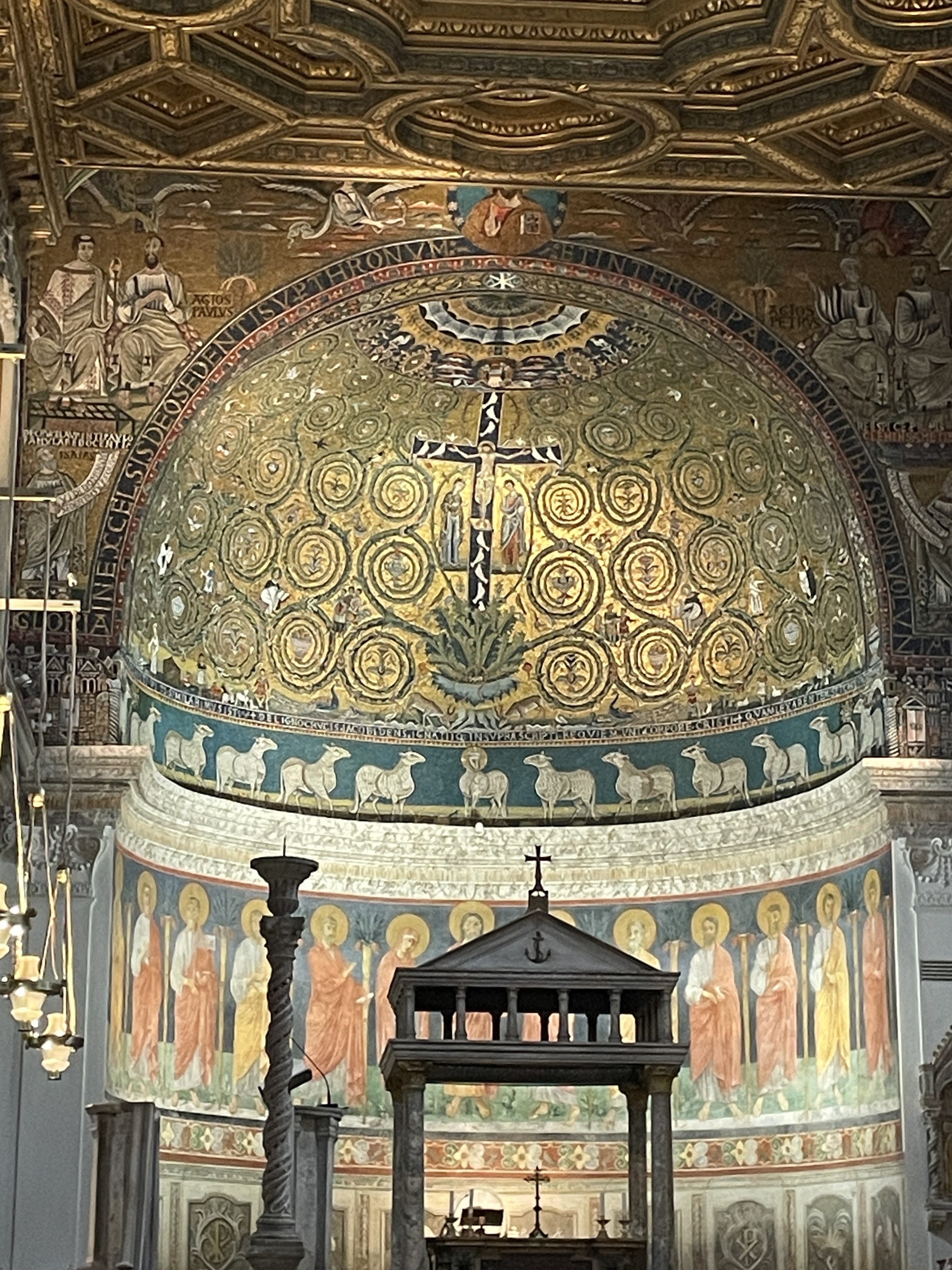
The apse mosaic, dating to around 1200, is in the Byzantine style featuring an arabesque motif of scrolled acanthus tendrils. (Why don’t we do apse mosaics anymore?)
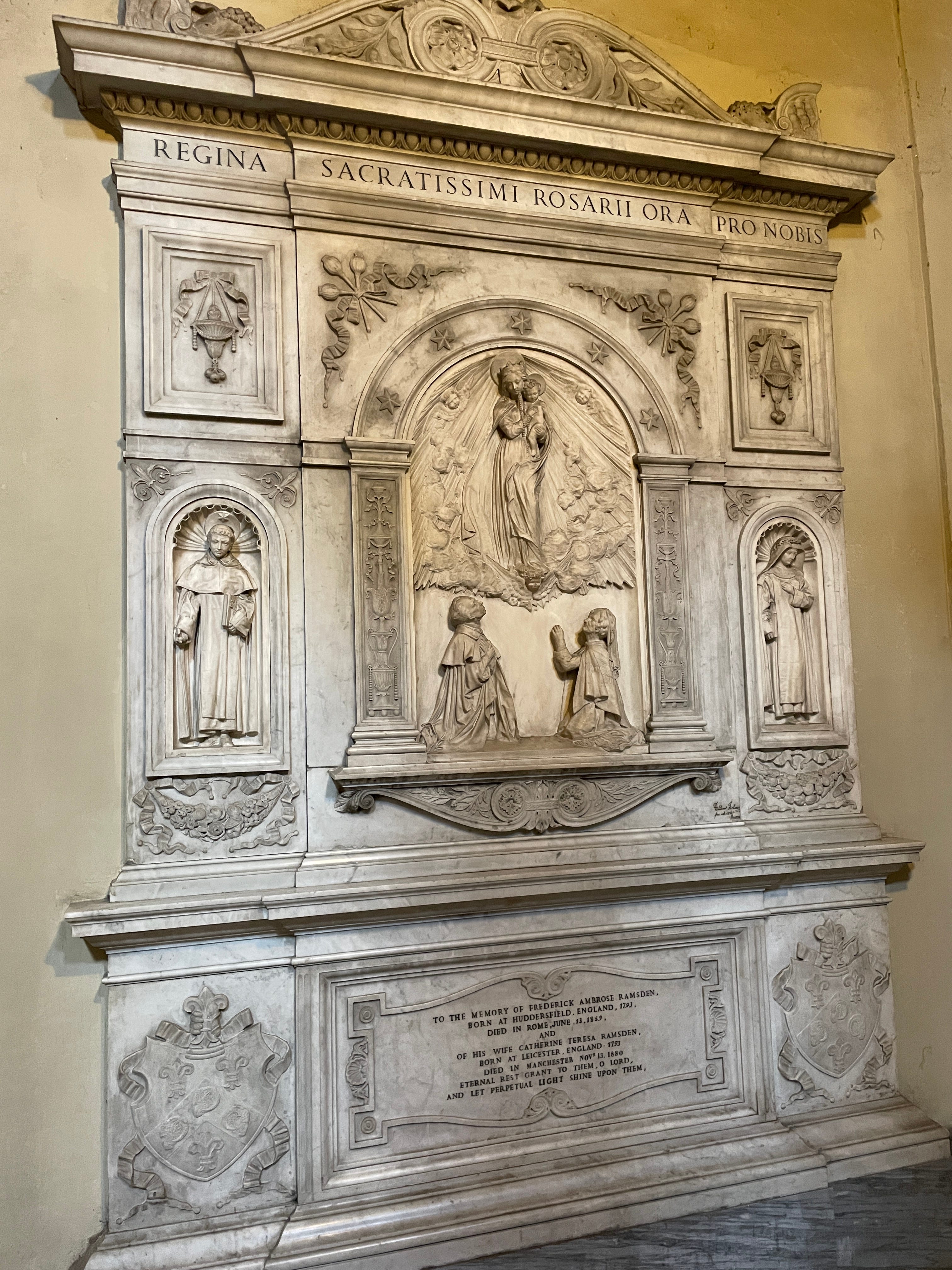
Between the chapel of Saints Cyril and Methodius and the door leading to the Sacristy is a monument to Frederick Ambrose Ramsden of Huddersfield, England, and his wife. This monument was erected in 1874. I was unable to find any information as to who he was or why he has a monument in Rome.
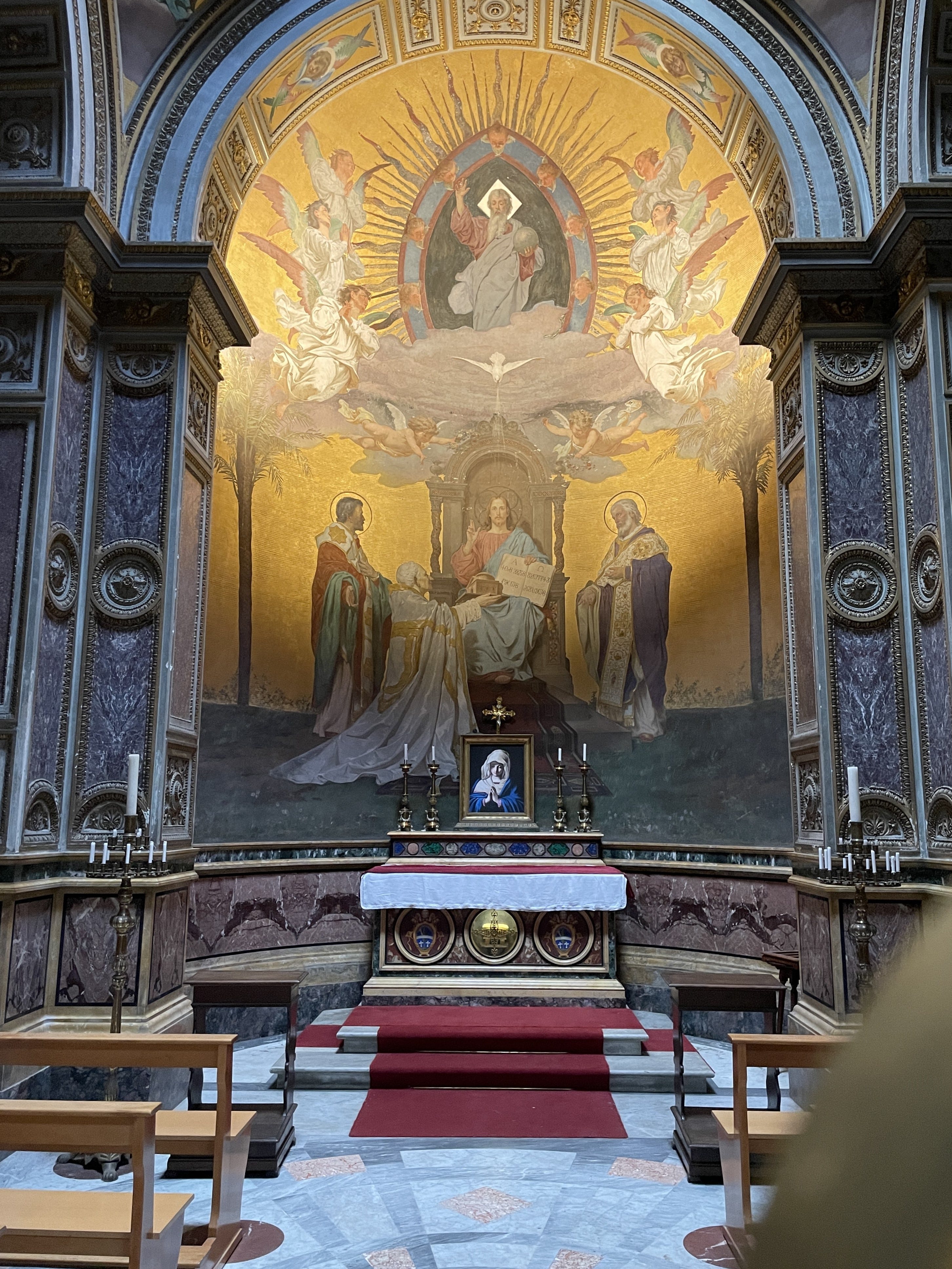
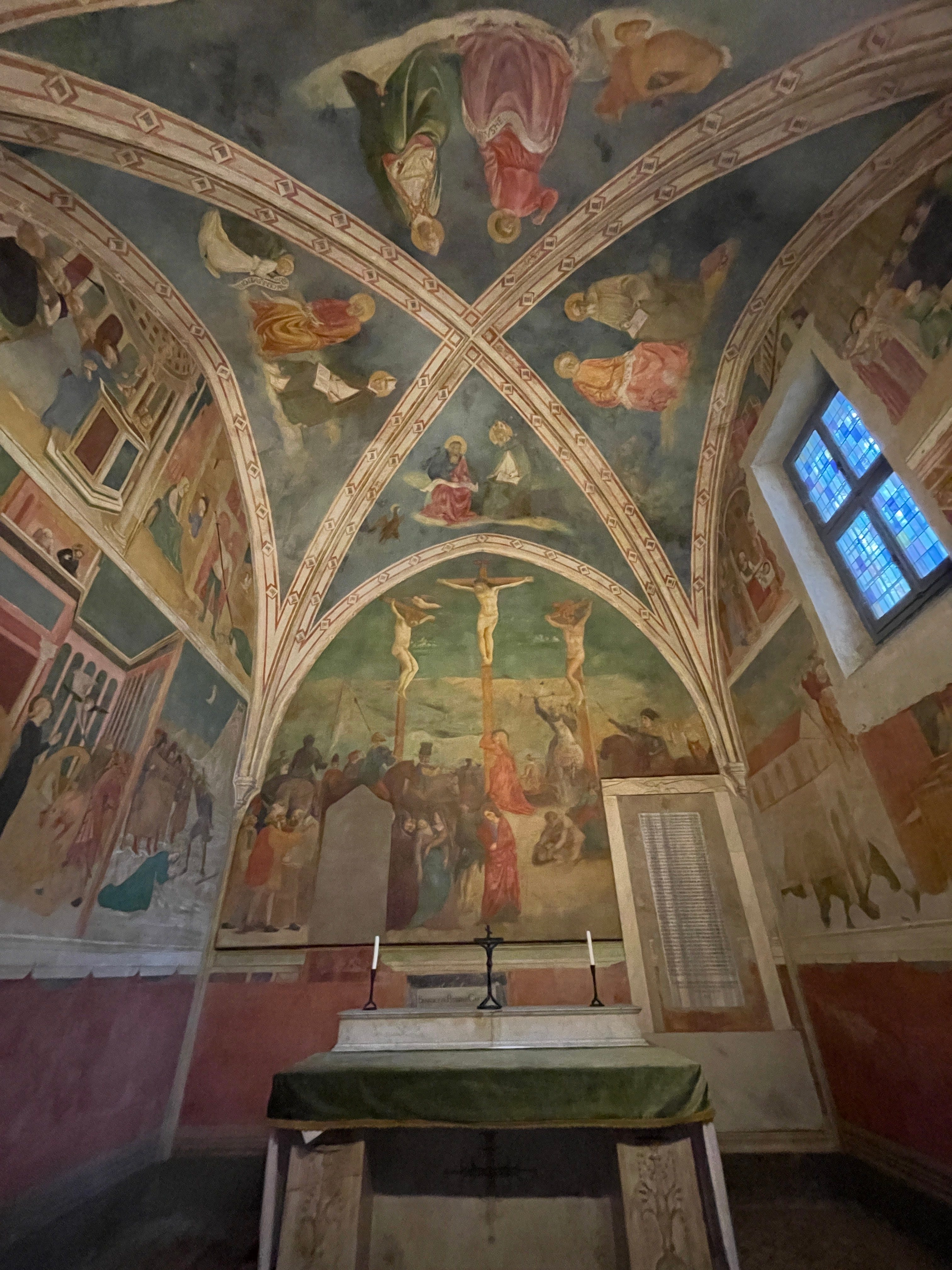
There is also a chapel to St. Catherine of Alexandria.
Soon, it was time to head underground for our tour.
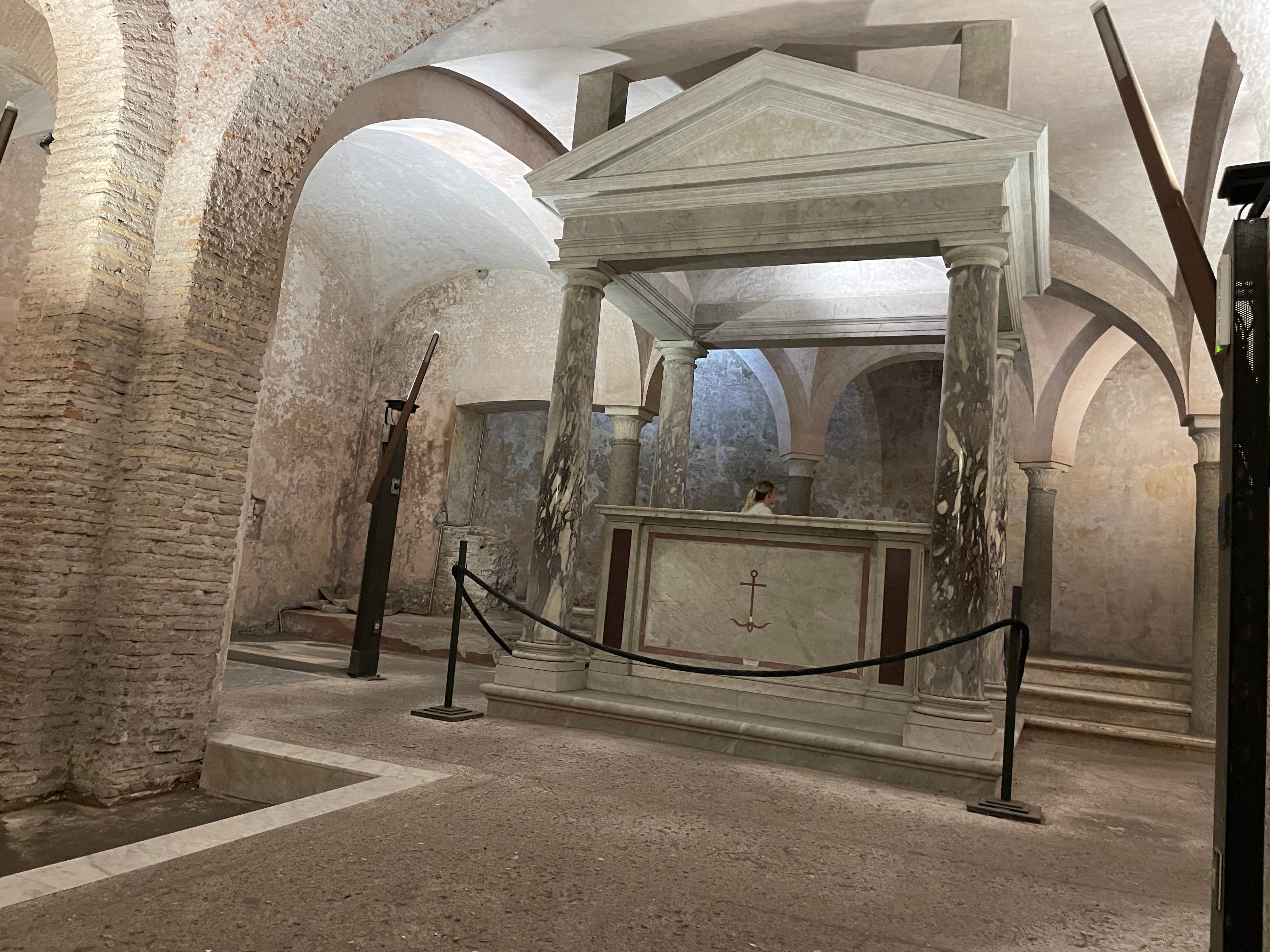
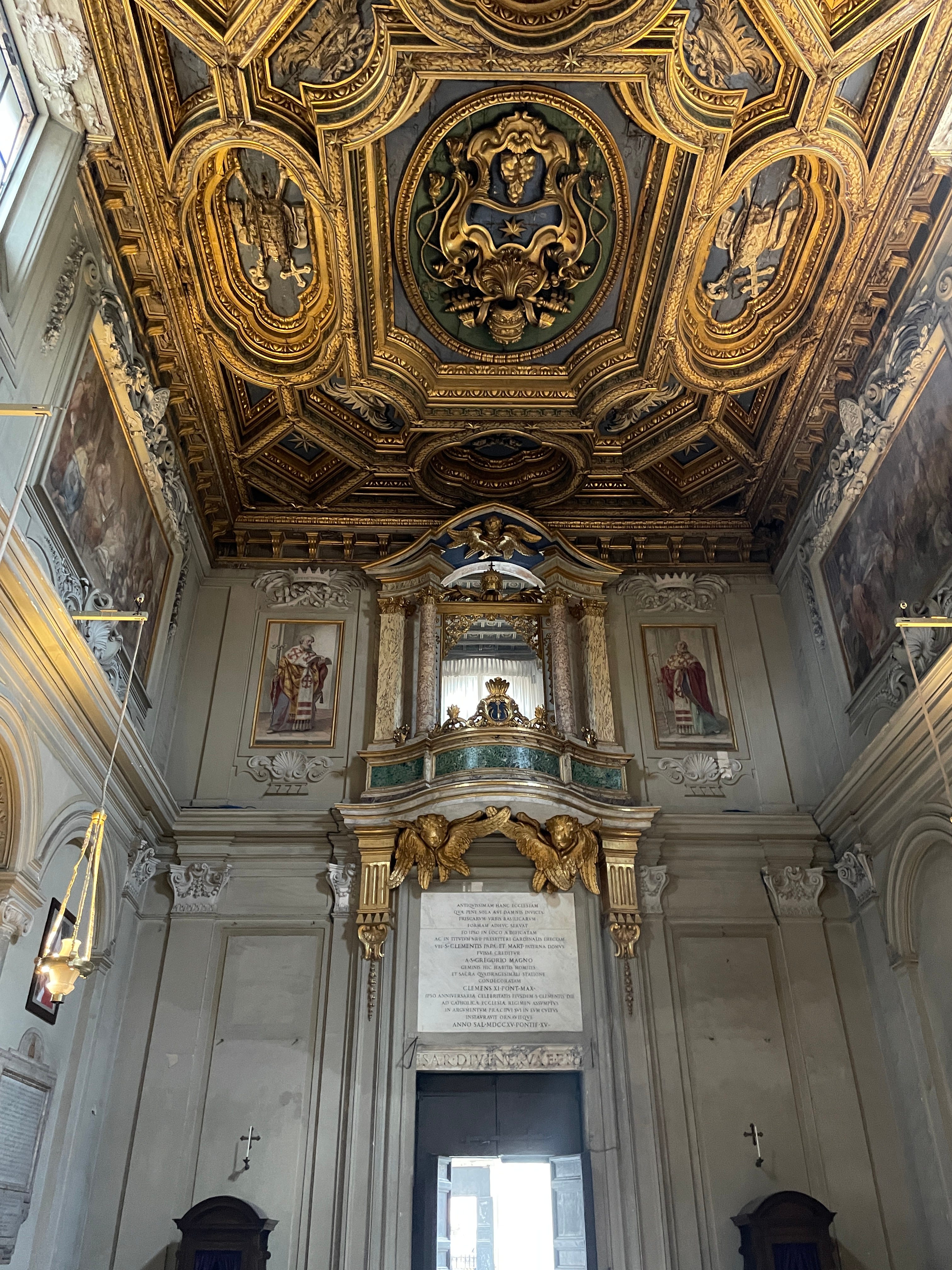
Unfortunately, I don’t have a detail on this picture, but I know the anchor motif is a symbol for St. Clement. For most of the underground tour, photography was restricted. However, the church has a nice website with a 3-D virtual tour of all three levels of this interesting church. No narration, but you also don’t have to fly to Rome and buy tickets.
St. Clement, the basilica’s namesake, is considered the first of the apostolic fathers. He was the fourth pope, serving from about 92-100. He was exiled by the Emperor Trajan to the mines and some accounts state he was eventually martyred by being tied to an anchor and cast into the sea—thus, the anchor became a symbol for him. We posses one work that is definitely attributed to him: Letter to the Church in Corinth. It is an interesting read.
His letter reveals that 50 years after St. Paul dealt with this often difficult church, they were still having issues. It is also a testimony to the primacy of the Bishop of Rome even at this early date. The Corinthians wrote to him to ask his help in settling their issues.
St. Clement is also notable because he is one of the few popes to have a Russian Orthodox Church dedicated to him. You can see it in Moscow.
Grace & peace,
Chris
If you enjoy these posts, you can subscribe for free.
If you really enjoy these posts, you can donate to support my studies.